

| Review | Open Access |
|---|
Impact of Mansehra-Muzaffarabad-Mirpur (M3) Expressway on Tourism in Azad Jammu and Kashmir (AJ&K) |
 |
|---|
Suriya Khanum1* and Samina Sabir2
1Government of Azad Jammu and Kashmir, Pakistan
2Kashmir Institute of Economics, The University of Azad Jammu and Kashmir, Pakistan
Roads serve as the major means of transportation for goods, services, and mobility across Azad Jammu and Kashmir (AJ&K), which also has significant tourism potential. The construction of the M3 expressway under China Pakistan Economic Corridor (CPEC) is currently awaiting government approval. Literature indicates that no study has examined the impact of the CPEC project on tourism growth so far. Therefore, it is essential to investigate its effect on tourist arrivals in AJ&K. The current study aimed to explore residents’ perceptions regarding the impact of constructing the Mansehra–Muzaffarabad–Mirpur (M3) expressway on tourist inflow in AJ&K. Moreover, it assessed whether the M3 expressway would improve connectivity in AJ&K. This research was motivated by the existing gap in studies and the importance of understanding public opinion on megaprojects. Furthermore, it helped in assessing local perspectives as to how the construction of the M3 expressway influences tourist movement and is valuable for policymakers to forecast the effects of new road projects on tourism development in AJ&K. The study gathered primary data from 200 local respondents across all three divisions of AJ&K via a structured questionnaire, and the Binary Logit regression was estimated using the Maximum Likelihood method. The findings suggested that the construction of the M3 expressway under CPEC enhances connectivity and boosts tourism in AJ&K.
1. INTRODUCTION
The China-Pakistan Economic Corridor (CPEC) serves as a framework for regional connectivity. This project aims to connect China, Pakistan, and the world (Abid & Ashfaq, 2015). The roads within CPEC connect the Xinjiang province of China with the Gwadar port in the Baluchistan province of Pakistan (Kanwal, 2018). Sabir (2021) stated that five projects, including a road project under CPEC, have been approved for AJ&K. These projects are expected to promote energy development, road infrastructure, and tourism, thereby impacting economic growth. The construction of the Mansehra-Muzaffarabad-Mirpur (M3) expressway is underway. According to the statement of the Prime Minister of AJ&K, M3 expressway will be a game changer and serve as the shortest route for connecting all districts of Azad Jammu and Kashmir (Rao, 2021).
AJ&K is blessed with almost all major tourism potentials, for instance, recreational, religious, cultural, heritage, adventure, agriculture, medical, and ecotourism. A vast range of mountainous landscapes (up to 6000m) and turbulent rivers, that is, Neelum, Jhelum, and Poonch, offer excellent potential for white water rafting (Akram et al., 2021; Sabir, 2021). Despite the numerous tourist sites and beautiful landscapes, the number of tourists remains low in AJ&K, with only 0.525 million tourists visiting AJ&K during 2022.
Transport infrastructure, including roads, ports, and railway networks, is well recognized to connect the regions (Derudder et al., 2018). Since AJ&K lacks alternate means of connectivity and linkages other than roads, investing in the road infrastructure is essential for intra-district connectivity and to connect with the rest of the world through Pakistan (Sayyid, 2019). Hussain et al. (2017) found a positive and significant impact of infrastructure, including road projects, on the flow of tourists in Gilgit-Baltistan (GB). No previous study has evaluated the local perception regarding the impact of the construction of the Mansehra-Muzaffarabad-Mirpur (M3) expressway under CPEC on tourism in AJ&K.
The study conducted by Zhou et al. (2021) highlighted the importance of knowing public opinion about infrastructure mega projects. Besides the research gap, the current study is significant for policymakers and government officials. This is because they would get insights into the local public perceptions about the mega project of the M3 road infrastructure. Significantly, the local community would support the construction and sustainability of the project due to the perceived socio-economic benefits of the M3 expressway.
To date, no study has assessed the role of the M3 expressway in the development of tourism in AJ&K. This research addressed that gap by analyzing how the construction of the Mansehra–Muzaffarabad–Mirpur (M3) expressway influences tourism growth in the region. Focusing on locals’ perceptions, the study explored the relationship between road infrastructure and tourism promotion. Moreover, it offered valuable insights for policymakers to evaluate the potential impacts of future road projects on tourism development in AJ&K.
Research Objectives
The current study aimed to address the following objectives:
- To examine residents’ perceptions of the impacts of the Mansehra–Muzaffarabad–Mirpur (M3) expressway on tourist inflows in AJ&K.
- To assess the extent to which the M3 expressway improves connectivity within AJ&K.
The rest of the study is structured as follows: The second section provides a detailed literature review. The third section displays the methodology, data, and model. The fourth section elaborates on the results and discussion, and the fifth section concludes the findings.
Literature Review
Literature supports the positive effects of infrastructure development, including roads, on employment, socioeconomic development, tourism, productivity, and growth in Pakistan and many other countries (Ali et. al, 2018; Baig & Zehra, 2020; Laborda & Sotelsek, 2019; Mahmood et al., 2022; Mbaiwa, 2003; Stephanedes & Eagle, 1987). Abid and Ashfaq (2015), during their study on the challenges and opportunities of CPEC, concluded that the CPEC has brought prosperity and peace in South Asia. It connects Kashgar in China to Gwadar port in Pakistan near the border with Iran, thus enhancing regional connectivity. In addition to China and Pakistan, CPEC benefits Iran, Afghanistan, the Central Asian Republic, and the whole region to connect with each other and spurring economic growth. The project is a journey towards economic regionalization in the globalized world (Fatima et al., 2019). The connectivity projects under CPEC eventually result in peace, economic and social development, and a win-win model for all (Jaleel et al., 2019; Saad et al., 2019). M3 expressway is expected to reduce distances within AJ&K. Furthermore, it would link the region with Pakistan from the Hazara division, extending from Muzaffarabad along the west bank of the Jhelum River, connecting all the districts of AJ&K, including a route from Mirpur to district Jhelum. The inter- and intra-district road network of AJ&K is in poor condition. Therefore, the construction of the CPEC project of the M3 expressway would improve the condition of existing roads, produce new infrastructure, and promote investment in the region (Khalique et al., 2020). The construction of Mansehra-Muzaffarabad-Mirpur (M3), a four-lane expressway with an estimated length of about 200km, has been sanctioned for AJ&K under CPEC. The M3 connects Muzaffarabad, the capital of AJ&K, with the district Mansehra of Khyber Pakhtunkhwa (KPK) on one side and the Grand Trunk (GT) Road through Mirpur district of AJ&K and Mangla at Dina district, Jhelum of Punjab Province on the other side (Sayyid, 2019).
The construction of road infrastructure enhances connectivity, lowers transport costs, and promotes economic development, thereby significantly contributing to the socioeconomic uplift of the region and boosting connectivity and tourism (Ahmad, 2016; Nawaz et al., 2021). Transport plays a crucial role in encouraging tourism. Factors, such as long distances, limited inter-district connectivity, and higher travel costs due to road infrastructure are key reasons for low tourism levels (Kanwal et al., 2020). Tourist infrastructure, especially road facilities accompanied by effective governance, is vital for attracting visitors. Tourists tend to choose destinations that offer easy access and good governance (Baig & Zehra, 2020). Roads are important because infrastructure developments create numerous growth opportunities, improve mobility, increase social and business activities, facilitate exports, and open pathways to new markets (Ali et al., 2017). The development of road infrastructure in Pakistan is expected to improve regional connectivity, institutional quality, urbanization, and employment. Therefore, the government should prioritize the development of highways, motorways, and local roads (Nawaz et al., 2021). Saheed et al. (2021) studied the impact of a road project, namely the Hazara Motorway, and found that its construction under CPEC led to increased growth in tourism across the regions it passes through.
The Tourism Policy of 2019 envisages that the Government of AJ&K has declared tourism as an industry that would contribute to the socioeconomic and political development of the state. In AJ&K, the tourism industry is one of the key sectors with significant potential. The government facilitates, regulates, and encourages the private sector to promote and develop tourism in the area. Akram et al. (2021) stated that a large number of majestic lakes, scenic landscapes, historical monuments, and a variety of flora and fauna in the state of AJ&K need to be explored by nature lovers from around the world.
Beautiful places alone are not enough to attract tourists to any area; having a compatible infrastructure and road network is essential to increase tourist flow. The above-mentioned literature confirms that by reducing distances, offering time and cost efficiency, and decreasing traffic accidents and vehicle wear, road infrastructure connects regions and people. For tourism to flourish in AJ&K, constructing infrastructure for efficient, comfortable, fast, and safe mobility should also be a priority. Consequently, developing tourism infrastructure, including roads, is crucial to attract a continuous flow of tourists to AJ&K. This is the first study that has examined the expected impacts of the M3 expressway on the tourism development in AJK.
Methodology
The research was carried out in partial fulfilment of the Senior Management Course at Kashmir Institute of Management (KIM), a public sector professional training institute at Muzaffarabad, AJ&K. The research design and the model were developed in consultation with the research supervisor. The study aimed to cover all three divisions: Poonch, Mirpur, and Muzaffarabad of AJ&K. To measure the perceptions of the local population about the effect of M3 construction on tourist flow in AJ&K, the study used primary data obtained through a structured questionnaire. The questionnaire was disseminated among 250 residents in three divisions of AJ&K. To meet the requirements and objectives, a convenience sampling technique was used. Additionally, responses regarding the construction of M3 and its impact on tourism in the area were gathered during June and July 2022. The sample consisted of in-service and retired government servants, officeholders from the Tourism Department, Energy Department, Communication and Works Department, bureaucrats, university students, as well as teachers and members of civil society. Keeping in mind the maturity and seriousness of the responses, the questionnaire was administered to a targeted population aged 20 years and above. Graduation was the minimum qualification to be included in the sample.
The sample of 250 was taken from the population residing in Muzaffarabad, Poonch, and Mirpur divisions. Responses from some of the fellow Senior Management Course participants were also gathered. The data was collected by the researcher. Two assistants were also engaged in the collection of data from government officials, teachers, and university students belonging to AJ&K. Some respondents already knew much about CPEC projects and the M3 expressway; others asked questions and were briefed about the project. Out of a total of 250 disseminated questionnaires based on convenience sampling across three divisions of AJ&K, the survey could gather only 213 responses. Out of 213 variables, only 200 responses were entered into SPSS version 2021, as 13 responses were incomplete and ambiguous.
Conceptual Model
Figure 1
Perceptions of the Local Population about the M3 Expressway and Tourism in AJ&K
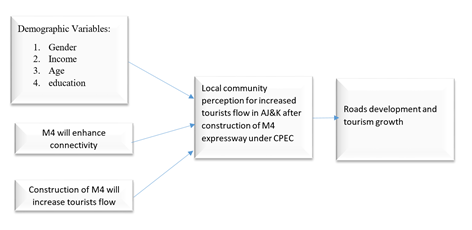
To gather relevant information, the official websites of the Government of Pakistan and AJ&K were visited to seek basic information about CPEC projects for AJ&K, particularly the M3 expressway. Data about existing road infrastructure, tourism facilities, and tourist inflow in Azad Kashmir were collected from relevant offices of line departments of the Government of Azad Jammu and Kashmir (GoAJ&K).
In the current study, locals’ perceptions of increased tourist inflow in AJ&K under CPEC due to the M3 expressway is a dependent variable. The dependent variable in the study is binary in form.
The econometric equation of the model is specified as follows:
Tourism growth=f(gender,income,age,edu,tourism facilities,connectivity,tourism potential) (1)In equation (1), tourist inflow (TI) is the dependent variable, and it is measured by the number of tourists that would increase due to the construction of the M3 motorway. If tourists increase, then it is indicated as 1 and 0 otherwise. The explanatory variables are gender (G), the income of the person (I), age (A), education (edu), tourism-related facilities (TF), connectivity (Co), and tourism potential (TP). The econometric model is written as:
TIi=β°+β1 Gi+β2 Ii+β3 Ai+β4 TFi+β5 Coi+β6 TPi+Ui (2)The variables in the model are described as subscript, i indicates individuals to whom the questionnaire is being administered, that is, i=1,2,…,200, , βs are the parameters to be estimated, and U is the error term. G represents gender, 1 is assigned to males and 0 to females, I represents income, 1 indicates income between 10000 and 50000, 2 for income of the individuals between 50000 to 100000, and 3 for income above 100000. A is the age of respondents with 1 indicating 18 to 30 years, 2 shows the age between 30 to 50 years, and 3 represents age above 50 years. TF is the facilities provided to the tourists wherein 1 stands for good facilities and 0 for poor facilities, Co represents increasing connectivity due to M3 expressway with 0 showing that connectivity would not increase and 1 shows that connectivity may increase and TP is the perception for tourism potential in AJK with 0 indicates no potential and 1 indicates the presence of good tourism potential.
This study used the logistic regression technique for analysis. A similar mode and method of analysis have been used by Saheed et al. (2021) for the evaluation of the impacts of the Hazara Motorway on tourism growth in GB.
The rest of the study proceeds as follows: Section 1 describes the background, road infrastructure, and M3 expressway. Section 2 discusses tourism in AJ&K. Section 3 presents the results and discussion. The last part of the study consists of the conclusion.
Road Infrastructure of AJ&K and M3 ExpresswayRoad transportation is the only available source of transportation in AJ&K, which is an important element in the growth and development of tourism in the area. Many studies have proved that road infrastructure and transportation by road play an integral role in the tourism industry. This is because roads are important in transporting goods and people from one place to another. Easy, safe, economical, and well-maintained transportation is considered as a significant factor for the development of tourism and increasing tourist flow in any area (Denstadli & Jacobsen, 2011; Scherer & Thelen, 2020; Sorupia, 2005).
The Communication and Works Department is responsible for planning, designing, and constructing roads and bridges, preparation of standards specifications for various types of roads and bridges, maintenance, repairs, and improvement of roads. Road structures, road research, and material testing are used during the execution of projects and procurements of works in AJ&K. Table 1 below represents that total length of roads in AJ&K is 10365 Km including 9806 Km metaled and 458 Km fair-weather roads. The road length and conditions are not good for quick and easy mobility in the areas of AJ&K as the same has been studied and found by Arooj (2014).
Table 1
Types and Length of Roads in AJ&K
|
District |
Types of Roads |
Total length (km) |
|
|---|---|---|---|
|
Metaled Roads (km) |
Fair-weather (km) |
||
|
C&W (North) |
5904 |
434 |
6439 |
|
C&W (South) |
3902 |
24 |
3926 |
|
G. Total |
9806 |
458 |
10365 |
Note. Source: Office of the Chief Engineer, Communication and Works Department, GoAJ&K
It was reported by Pakistan on 4th November 2021 that the crash of a coaster killed 22 and injured 8 in the Sudhnoti district of AJ&K. AJ&K has been experiencing a rash of such accidents. During July 2022, four people were killed in road traffic accidents in the district of Poonch and Neelum. In another accident, 10 people were injured in the district of Muzaffarabad.
Mansehra-Muzaffarabad–Mirpur (M3) ExpresswayAJ&K faces a lack of connectivity within and among the districts. It takes more time and cost for people travelling from the Mirpur division through Rawalpindi and Islamabad to reach the Muzaffarabad division. M3 expressway would be the shortest route when travelling within the areas of AJ&K or from AJ&K to central Punjab or KPK. While researching the potential benefits of CPEC on the economy of AJ&K, Khalique et al. (2020) found that the expressway would shorten the existing route by 50km and save 4 to 6 hours of travelling time when moving along this route. Travel time between Muzaffarabad and Mirpur would be reduced from 6 to 3 and a half hour. The construction of a four-lane M3 expressway would create short and strategic links between KPK, Punjab, and AJ&K. This route would save travel time and serve as an alternative route for CPEC. The M3 expressway project would establish a short and direct connection among all three divisions of AJ&K. Through this project, 80% of the area of AJ&K is located along the route of CPEC, and this will directly impact AJK through interconnectivity of cities (Nazneen et al., 2019; Sayyid, 2019).
Part of the M3 expressway Mansehra-Muzaffarabad (CPEC Link), which would be connected to Hazara motorway, one of the main arteries of CPEC, via Pano Dheri and Gujjar Galli, has been approved by the Executive Board of the National Highway Authority (NHA) at a cost of Rs. 44.72 billion for consideration of the Central Development Working Party/Executive committee of National Economic Council (ECNEC). Gwadar Pro reported on 30th May 2022 that the Prime Minister of Pakistan inaugurated the Mansehra-Muzaffarabad Expressway.
Tourism Industry of AJ&KSeetanah et al., 2011, while using panel data estimation techniques, found that distance, tourism infrastructure including transport services, relative prices, and income of tourists are important components of the tourism demand equation. Safe and easy connectivity enables the quick and safe mobility of a tourist from the residence to the desired destination and back to the residence. The Tourism Department of AJK is working on a strategy to facilitate visitors by providing them with basic tourist infrastructure and other recreational facilities. There are 29 heritage and archaeological sites throughout 10 districts of AJ&K, which are being operated and maintained by the AJ&K Tourism Department. According to the information provided by the director of the tourism Department of AJ&K, there are 34 tourist infrastructures (Motel, Lodges & Huts), 09 Tourism Information Centers (TIC), 19 roadside facilities, 4 transport vehicles for tourists, and 150 AJK tourist police personnel. Many development projects are presently under execution, including a chairlift/cable car at Arang Kel, Ganga Choti, Jhandi Chontra Bhimeber, and Tolipeer. Table 2 below shows tourist traffic in AJ&K from the years 2017-2022.
Table 2
Tourists Flow in AJ&K
|
Year |
Tourists (M) |
|---|---|
|
2017 |
1.200 |
|
2018 |
1.450 |
|
2019 |
0.650 |
|
2020 |
0.365 |
|
2021 |
0.470 |
|
2022 |
0.525 |
Note. Source: Tourism Department, GoAJ&K
Implementation of sustainable tourism initiatives and the construction of better and more roads would result in the promotion of tourism, the economic growth of the state, and a reduction of unemployment in the region.
Results and Discussion
Both the dependent and independent variables were used in the analysis. The perceptions of the local population about the impact of M3 expressway on the inflow of tourism in AJ&K has been estimated by each demographic factor and independent variable, and is presented in the form of bar charts as follows:
Figure 2
Age of Respondents
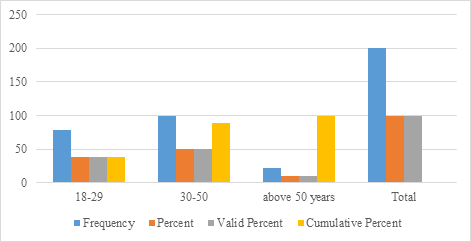
Figure 2 explains that out of 200 respondents, 39% (78) were between 18-29 years of age, 50% (100) were in the age group between 30-50 years, and 11% (22) of respondents were above 50 years of age.
Figure 3
Gender-wise Respondents
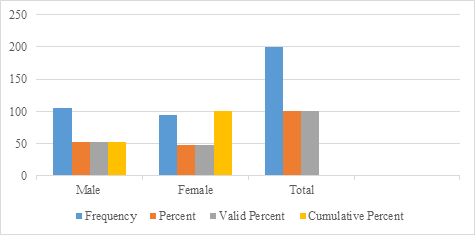
Figure 3 describes gender as: 52.5% (105) out of 200 were males and 47.5% (95) were female respondents.
Figure 4
Education of Respondents
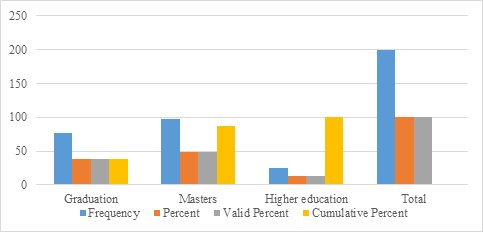
Figure 4 shows that (77) 38.5% of respondents were graduates, with 14 years of education. A total of 49.0% (98) respondents had master's degrees; with 16 years of education, and 12.5% (12) of the respondents had higher education, 18 or above years of education.
Figure 5
Income of Individuals
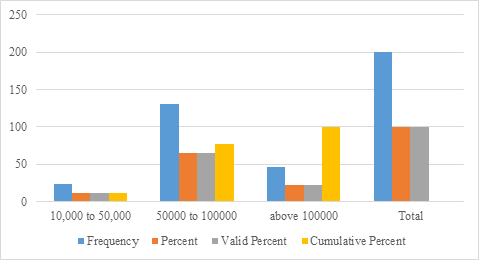
The results of Figure 5 reveal that the income of 12.0% (24) of respondents was between 10,000 to 50,000 rupees. The income of 65.0% (130) respondents was between 50,000 and 100,000, whereas the income of 23.0% (46) respondents was above 100,000 rupees.
In addition to the above individual demographic factors, household/family size was also included in the individual demographic factors. The results of the variable could not be analyzed. This is because many respondents gave the physical size of the house building and not the family size.
Figure 6
M3 will Increase of Tourist Flow in AJ&K
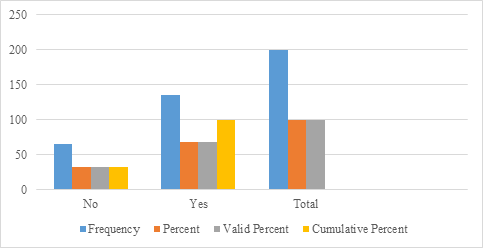
The results explain the frequency, percentages, valid percentages, and cumulative percentages of the perceptions of the local population about the increased tourist inflow in AJ&K after the construction of the M3 expressway under CPEC. A total of 67.5% (135) believed that tourist flow is expected to increase with the construction of the M3 expressway. Whereas 32.5% (65) perceived that the construction of the M3 expressway would not have any effect on the number of tourists coming to AJ&K.
Figure 7
M3 Will be Constructed?
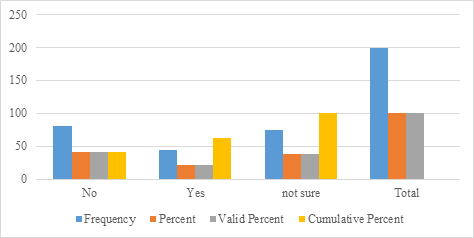
The descriptive results show that 22.0% (44) respondents perceived that the M3 expressway would be constructed, and 40.5% (81) perceived that it would not be constructed. Whereas, 37.5% (75) respondents were not sure about the construction of the M3 expressway. This is because they did not have any information about the construction of M3 expressway.
Figure 8
M3 Would Increase Connectivity?
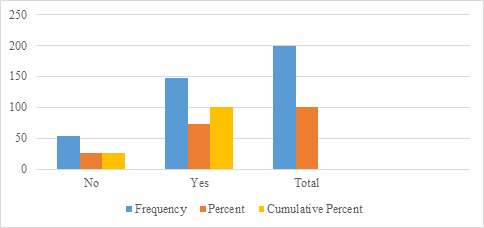
The results about the impact of increased connectivity show that 73.5% (147) of respondents stated that the M3 expressway would increase connectivity in AJ&K. A total of 26.5% (53) responded that the expressway would not enhance connectivity in AJ&K because they are of the view that government should improve the existing roads.
Figure 9
Do You Know about M3 Expressway?
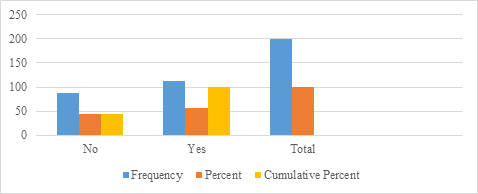
The results pertaining to the knowledge of the M3 expressway reveal that 56% (112) of the study participants knew about the construction of the M3 expressway under CPEC. The percentage and the number of respondents who were unaware of the M3 expressway was 44.0% (88).
Figure 10
Rich Tourism Potential in AJK
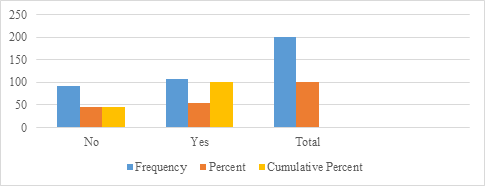
Figure above explains that 54.0% (108) of respondents believed that AJ&K has rich tourism potential. While, 46.0 (92) responded with a no to the asked question.
Figure 11
Satisfied with Existing Facilities
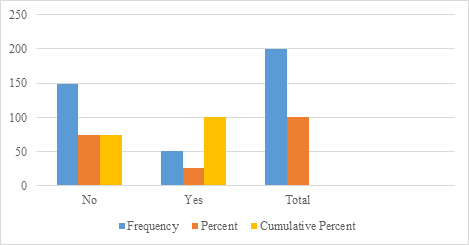
Statistics show that 54.5% (149) of respondents were not satisfied with the existing tourism facilities in AJ&K, whereas 25.5% (51) from the sample of 200 were satisfied with the existing tourism facilities in AJ&K.
Figure 12
Satisfied with Road Conditions
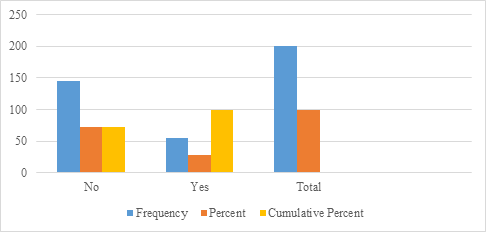
The results in Figure 12 present that only 27.5% (55) of respondents were satisfied with the existing roads in AJ&K, while 72.5% (145) were not satisfied with the condition of roads in AJ&K.
Figure 13
M3 will Enhance Quality of Life
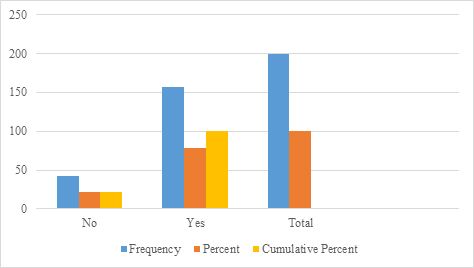
The descriptive results of Figure 13 express that 78.5% of respondents believed that the construction of the M3 expressway would enhance the quality of life in AJ&K. While, 21.5% (43) replied that the quality of life of the people of AJ&K would not be enhanced due to the construction of the M3 expressway.
Table 3
Descriptive Statistics
|
|
N |
Minimum |
Maximum |
Mean |
SD |
|---|---|---|---|---|---|
|
Age of the interviewer |
200 |
1.000 |
3.000 |
1.720 |
0.651 |
|
Gender |
200 |
1.000 |
2.000 |
1.475 |
0.501 |
|
Education level |
200 |
1.000 |
3.000 |
1.740 |
0.667 |
|
Income of individuals |
200 |
1.000 |
3.000 |
2.110 |
0.583 |
|
Do you think that the M3 motorway would increase tourist inflow in AJK? |
200 |
0.000 |
1.000 |
0.675 |
0.470 |
|
Do you know that M3 would be constructed? |
200 |
1.000 |
3.000 |
1.970 |
0.885 |
|
Do you know that AJK has rich tourism potential? |
200 |
0.000 |
1.000 |
0.540 |
0.500 |
|
M3 would increase connectivity |
200 |
0.000 |
1.000 |
0.735 |
0.442 |
|
Are you satisfied with the existing facilities for tourists? |
200 |
0.000 |
1.000 |
0.255 |
0.437 |
The education level showed a standard deviation value of 0.666, mean score was 1.740, a max value of 3.00, and a minimum value of 1.000 with a significant level. The income of an individual had a standard deviation of 0.582 with a maximum value of 2.110 and a minimum value of 1.000 at a significant level. Mg motorway increases the tourist inflow, having a standard deviation value of 0.469 with a max value of 1.000 and a minimum value of 0.000, with a significant level. M3 would increase connectivity, having a standard deviation value of 0.442 with a max value of 1.00 and a minimum value of .00 at a significant level.
Table 4
Variables in the Equation
|
|
B |
S.E. |
Wald |
df |
p |
Exp(B) |
|
|---|---|---|---|---|---|---|---|
|
Step 0 |
Constant |
0.731 |
0.151 |
23.438 |
1.000 |
0.000 |
2.077 |
Binary Logit Model Analysis
The results in table below reveal that residents from all three divisions of AJ&K perceived that the tourist inflow in AJ&K would increase after the construction of the M3 expressway under CPEC. A significant positive effect of the construction of M3 was perceived on increased tourist inflow, connectivity, and quality of life. Whereas, there was a negative and significant effect of satisfaction on road conditions and tourism facilities in AJ&K. Each variable is discussed under the individual heading below:
Table 5
Binary Logit Model
|
Variables |
Score |
df |
Significance level |
|---|---|---|---|
|
Age of the interviewer |
4.186 |
1 |
0.041 |
|
Gender |
11.312 |
1 |
0.001 |
|
Education level |
0.433 |
1 |
0.510 |
|
Income of the individuals |
0.669 |
1 |
0.413 |
|
Do you know that AJK has rich tourism potential? |
30.060 |
1 |
0.000 |
|
M3 would increase connectivity |
66.144 |
1 |
0.000 |
|
Are you satisfied with the existing facilities for tourists? |
0.244 |
1 |
0.622 |
|
Do you know that M3 would be constructed? |
19.852 |
1 |
0.000 |
|
Overall Statistics |
79.476 |
8 |
0.000 |
The findings align with the existing literature. Ineke and Winda (2018) highlighted that improved services and infrastructure contribute to the growth of tourism in Indonesia. Similarly, Khadaroo and Seetanah (2008) found that tourism infrastructure plays a vital role in attracting tourists across 28 countries. In the context of Pakistan, the Hazara Motorway, developed under CPEC, has significantly boosted tourism in KPK and the northern regions (Saheed et al., 2021). Moreover, the quality of life would improve with an increase in job opportunities as well as improvement in the provision of public services may help native people.
The results reveal that the residents perceived that AJ&K has rich tourism potential, which is a basic element and integral element for the promotion and growth of tourism in an area. The statistical analysis of the results reveals that there is a positive correlation between the construction of the M3 expressway and enhanced connectivity in AJ&K.
Table 6
Variables in the Equation Step 1
|
|
B |
S.E. |
Wald |
df |
Sig. |
Exp (B) |
|---|---|---|---|---|---|---|
|
Age |
0.602 |
0.378 |
2.542 |
1 |
0.100 |
1.827 |
|
Gender |
-0.625 |
0.399 |
2.454 |
1 |
0.101 |
0.535 |
|
Education level |
-0.035 |
0.321 |
0.012 |
1 |
0.913 |
0.966 |
|
Income |
-0.174 |
0.415 |
0.176 |
1 |
0.675 |
0.840 |
|
AJK has rich tourism potential |
0.807 |
0.431 |
3.501 |
1 |
0.061 |
2.241 |
|
M3 would increase connectivity |
2.338 |
0.451 |
26.890 |
1 |
0.000 |
10.364 |
|
Are you satisfied with the existing facilities for tourists? |
-0.377 |
0.436 |
0.746 |
1 |
0.388 |
0.686 |
|
Do you know that M3 would be constructed? |
0.605 |
0.233 |
6.775 |
1 |
0.009 |
1.832 |
|
Constant |
-1.868 |
1.305 |
2.050 |
1 |
0.152 |
0.154 |
Note. Variable(s) entered on step 1: age of the interviewer, Gender, Education level, Income of the individuals, Do you know that AJK has rich tourism potential, M3 will increase connectivity, Are you satisfied with existing facilities for tourists, Do you know that the M3 will be constructed?
Education level showed a value of 0.913 significance level, while income level depicted a value of 0.675. AJK tourism potential showed a significant level of .061, while M3 connectivity had a highly significant value of 0.000. The results show that the effect of independent variables on dependent variables, that is, education level and income, had a significant effect on the dependent variables.
ConclusionThe current study aimed to describe residents’ perceptions about the impact of the construction of the Mansehra- Muzaffarabad- Mirpur (M3) expressway on tourist inflow in AK&K. Moreover, it investigated whether the M3 expressway would enhance connectivity in AJ&K. The literature on CPEC, road infrastructure, and tourism was reviewed. The researcher collected data through a structured questionnaire. The Binary Logit model was used to analyze the data. This included tourism inflow in AJ&K as a dependent variable and construction of M3, connectivity, tourism potential, tourism facilities, education, income, and age as independent variables.
The study found that there is a positive correlation between the construction of the M3 expressway under CPEC and the increased tourism inflow in AJ&K. Connectivity and safe journeys are important factors in enhancing tourist flow in any area. The respondents, irrespective of their age, income, and gender, perceived that tourism in AJ&K would grow with the construction of the expressway.
It is important to consider that both variables cannot be properly delimited to verify the significance of a positive relationship between them. This is because many other factors also impact an increase in the flow of tourists.
Conflict of Interest
The authors of the manuscript have no financial or non-financial conflict of interest in the subject matter or materials discussed in this manuscript.
Data Availability Statement
Data supporting the findings of this study will be made available by the corresponding author upon request.
Funding Details
No funding has been received for this research.
REFERENCES
Abid, M., & Ashfaq, A. (2015). CPEC: Challenges and opportunities for Pakistan. Journal of Pakistan Vision, 16(2), 142–169.
Ahmad, S. (2016). Tourism in Pakistan: Challenges, prospects and potential of Gilgit-Baltistan. Pakistan Perspective, 21(2), 159–173.
Akram, S., Shahzad, M. W., Khalil, A., Younis, W., Shahzad, M., & Ghazanfar, F. (2021). Investigating the impact of tourism development on socio-economic development in AJ&K, Pakistan. International Journal of Management, 12(6), 189–200. https://doi.org/10.34218/IJM.12.6.2021.0017
Ali, L., Mi, J., Shah, M., Shah, S. J., Khan, S., Ullah, R., & Bibi, K. (2018). Local residents' attitude towards road and transport infrastructure (a case of China Pakistan economic corridor). Journal of Chinese Economic and Foreign Trade Studies, 11(1), 104–120. https://doi.org/10.1108/JCEFTS-08-2017-0024
Ali, S. A., Haider, J., Ali, M., Ali, S. I., & Ming, X. (2017). Emerging tourism between Pakistan and China: Tourism opportunities via China-Pakistan Economic Corridor. International Business Research, 10(8), 204–214.
Arooj, S. (2014). Barrier of distance and transportation to access antenatal care in Muzaffarabad Azad State of Jammu & Kashmir. HealthMED, 8(10), 910–915.
Baig, S., & Zehra, S. (2020). China-Pakistan economic corridor, governance, and tourism nexus: Evidence from Gilgit-Baltistan, Pakistan. Current Issues in Tourism, 23(23), 2884–2889. https://doi.org/10.1080/13683500.2020.1763266
Denstadli, J. M., & Jacobsen, J. K. S. (2011). The long and winding roads: Perceived quality of scenic tourism routes. Tourism Management, 32(4), 780–789. https://doi.org/10.1016/j.tourman.2010.06.014
Derudder, B., Liu, X., & Kunaka, C. (2018). Connectivity along overland corridors of the Belt and Road Initiative. National Academies. https://trid.trb.org/View/1563481
Fatima, N., Baig, A., & Shah, B. A. (2019). China-Pakistan Economic Corridor (CPEC): Fostering the trade, investment and economic globalization. Global Social Sciences Review, 4(2), 283–290.
Hussain, A., Fisher, D., & Espiner, S. (2017). Transport infrastructure and social inclusion: A case study of tourism in the region of Gilgit-Baltistan. Social Inclusion, 5(4), 196–208. https://doi.org/10.17645/si.v5i4.1084
Ineke, P. F., & Winda, F. N. (2018, July 17–18). Analysis of availability of tourism infrastructure: Comparative study in Joglosemar area [Paper presentation]. Proceedings of the International Conference on Economics, Business, and Economics, Semarang City, Indonesia.
Jaleel, S., Talha, N., & Shah, Z. (2019). CPEC and regional integration. Global Regional Review, 4(4), 19–28. http://dx.doi.org/10.31703/grr.2019(IV-IV).03
Kanwal, G. (2018). Pakistan's Gwadar Port. Center for Strategic and International Studies.
Kanwal, S., Rasheed, M. I., Pitafi, A. H., Pitafi, A., & Ren, M. (2020). Road and transport infrastructure development and community support for tourism: The role of perceived benefits, and community satisfaction. Tourism Management, 77, Article e104014. https://doi.org/10.1016/j.tourman.2019.104014
Khadaroo, J., & Seetanah, B. (2008). The role of transport infrastructure in international tourism development: A gravity model approach. Tourism Management, 29(5), 831–840. https://doi.org/10.1016/j.tourman.2007.09.005
Khalique, M., Ramayah, T., Hina, K., & Abdullah, F. (2020). CPEC and its potential benefits to the economy of Azad Jammu and Kashmir, Pakistan. In J. Syed, Y.-H. Ying (Eds.), China's Belt and Road Initiative in a global context: The China-Pakistan economic corridor and its implications for business (pp. 117–130). Palgrave Macmillan.
Laborda, L., & Sotelsek, D. (2019). Effects of road infrastructure on employment, productivity, and growth: An empirical analysis at the country level. Journal of Infrastructure Development, 11(1–2), 81–120. https://doi.org/10.1177/0974930619879573
Mahmood, S., Ali, G., Menhas, R., & Sabir, M. (2022). Belt and road initiative as a catalyst of infrastructure development: Assessment of residents' perception and attitude towards China-Pakistan Economic Corridor. PLOS ONE, 17(7), Article e0271243. https://doi.org/10.1371/journal.pone.0271243
Mbaiwa, J. E. (2003). The socio-economic and environmental impacts of tourism development on the Okavango Delta, north-western Botswana. Journal of Arid Environments, 54(2), 447–467. https://doi.org/10.1006/jare.2002.1101
Nawaz, S., Anwar, S., & Iqbal, N. (2021). The spatial effects of road infrastructure on employment in Pakistan: Quantifying the role of complementary factors. The Pakistan Development Review, 60(3), 309–330.
Nazneen, S., Xu, H., & Din, N. U. (2019). Cross-border infrastructural development and residents' perceived tourism impacts: A case of China–Pakistan Economic Corridor. International Journal of Tourism Research, 21(3), 334–343. https://doi.org/10.1002/jtr.2264
Rao, A. H. (2021, November 12). Mansehra-Muzzafarabad Mangla Mirpur express way to shorten routes in all districts: PM AJK. Daily Parliament Times. https://www.dailyparliamenttimes.com/2021/11/12/mansehra-muzzafarabad-mangla-mirpur-expressway-to-shorten-routes-in-all-districts-pm-ajk/
Saad, A., Xinping, G., & Ijaz, M. (2019). China-Pakistan Economic Corridor and its influence on perceived economic and social goals: Implications for social policy makers. Sustainability, 11(18), Article e4949. https://doi.org/10.3390/su11184949
Sabir, S. (2021). Impact of Karot hydro power project on the Pakistan economy. Strategic Studies, 41(3), 66–79.
Saheed, R., Ahmad, N., & Khan, A. (2021). Evaluating the impact of Hazara Motorway on tourism growth under the China-Pakistan Economic Corridor in Hazara region, Khyber Pakhtunkhwa, Pakistan. Global Political Review, 6(2), 55–66. http://dx.doi.org/10.31703/gpr.2021(VI-II).07
Sayyid, S. A. (2019). CPEC in Azad Jammu and Kashmir: A gateway to regional connectivity and beyond. Center for Peace Development and Reforms (CPDR). https://cpdr.org.pk/wp-content/uploads/2024/12/cpec-in-azad-j-kashmir.pdf
Scherer, E., & Thelen, T. (2020). On countryside roads to national identity: Japanese morning drama series (asadora) and contents tourism. Japan Forum, 32(1), 6–29. https://doi.org/10.1080/09555803.2017.1411378
Sorupia, E. (2005, September). Rethinking the role of transportation in tourism. Proceedings of the Eastern Asia Society for Transportation Studies, 5, 1766–1777.
Stephanedes, Y. J., & Eagle, D. (1987). Highway impacts on regional employment. Journal of Advanced Transportation, 21(1), 67–79. https://doi.org/10.1002/atr.5670210106
Zhou, Z., Zhou, X., & Qian, L. (2021). Online public opinion analysis on infrastructure megaprojects: Toward an analytical framework. Journal of Management in Engineering, 37(1), Article e04020105. https://doi.org/10.1061/(ASCE)ME.1943-5479.0000874