

| Review | Open Access |
|---|
Perceived Work Readiness among Graduates: A Case Study from Pakistan |
 |
|---|
Shazia Ishaq* and Zahid Asghar
School of Economics, Quaid-i-Azam University, Islamabad, Pakistan
The current study aimed to examine graduates’ perceptions regarding their career readiness. Moreover, it focused on gaps in digital literacy, technical skills, and labor market alignment. The study collected data from 800 university students from all major provinces, such as Punjab, Sindh, KPK, Baluchistan, Gilgit Baltistan (GB), and Kashmir. Using advanced methodologies, such as correspondence analysis, factor analysis, and decision tree models, the results revealed critical gaps in Artificial Intelligence (AI) awareness, practical competencies, and career guidance among university students. It implied that Pakistan's traditional education system is unable to equip graduates for the technology-driven job market. The study recommended an urgent need for educational reforms, emphasizing the integration of digital literacy, entrepreneurship training, and enhanced career guidance.
1. INTRODUCTION
The transition from higher education to the workforce is a critical stage for graduates, especially in emerging economies, such as Pakistan, where the job market is characterized by rapid change and increased competitiveness. In the face of global economic trends, educational institutions are under increasing pressure to equip students with the required skills and capabilities. Graduates are expected to demonstrate key workplace skills. These include effective communication, teamwork, problem-solving, flexibility in applying technology, and a commitment to lifelong learning, demonstrating their readiness for the workforce (Jackson, 2013).
Career readiness has become a critical area for educational research, focusing on graduates’ career-related preparedness as they enter the workforce. Key factors influencing graduates’ perceptions about their preparedness include familiarity with the academic curriculum, assessment methods, training expectations, and understanding of postgraduate skills requirements in their fields (Cai, 2013; Jackson, 2013).
Graduates who consider themselves ready to work tend to feel less anxious as they transition from academic to a professional environment, particularly in high-stress areas that rely heavily on effective performance from the outset. The relationship between students' interest and the quality of education they receive is reinforced by individual experiences and expectations during their academic journey (Malau-Aduli et al., 2022).
In this context, graduates need experimental knowledge to enhance their practical skills for a smooth transition to the workplace. Work readiness encompasses adaptability, competence, and the ability to engage with new technologies, all of which are essential in a competitive and technology-driven workplace. However, studies have shown that many Pakistani graduates lack foundational skills, especially practical and digital skills, which reduces employability and limits their potential for professional development (Autor et al., 2003; Bessen, 2015; Cappelli, 2012). These shortcomings not only hinder the growth of individual entrepreneurship but also increase fragility in the workplace, which is progressively dominated by automation and AI-driven technology.
Skills mismatches and skills gaps have been identified as major obstacles to effective labor market entry. Ansarey (2017) argues that new graduates often face significant challenges in finding employment due to gaps between education and the skills required by employers, particularly in developing countries. These issues are particularly evident in developing economies; Béduwé and Giret (2011) showed that French graduates face significant disadvantages in the labor market when their qualifications do not match the requirements of the job, highlighting the global nature of skills mismatch problems. On a broader level, Brown et al. (2011) argue that globalization and increasing competition have created the so-called “global auction” for jobs, where the promise of education does not guarantee job stability or income security. Together, these studies have reinforced the idea that the skills gap is not unique to individual countries but represents a systemic challenge in modern labor markets, emphasizing the urgent need for education systems to adapt to industry demands.
In Pakistan, graduates from various disciplines face unique challenges as they transition into the workforce, grappling with the prospect of transferring theoretical knowledge to skills and fields that affect their respective fields. This transition is often fraught with feelings of inadequacy and unpreparedness, particularly when graduates must adapt to the emphasis on ongoing self-directed career development (Bhatti et al., 2022). Effective support mechanisms, such as mentorship programs, peer networking, and industry connections, are crucial for positive learning outcomes and easing the transition into professional life (Reddy et al., 2023).
The difficulty of finding jobs for graduates is not unique to Pakistan; however, also across South and East Asia. Similar concerns have been raised about the lack of preparedness of graduates for Industry 4.0 skills and the evolving labor market. A recent study shows that unskilled graduates remain a critical issue in regional countries. This highlights the need to reform higher education in order to focus on digital and practical skills (Rosfiyanti et al. 2024).
Although there exists a substantial body of research focusing on the work readiness of graduates within healthcare and technical fields, research addressing self-assessment of work readiness among graduates from a broader range of disciplines, particularly within the context of Pakistan, remains limited (Cao, 2021; Jackson, 2013).
Most studies have primarily focused on specific universities or programs, leaving a gap in understanding the diverse experiences of graduates across multiple institutions. This study intended to highlight the findings of self-assessment of job readiness among graduates of various universities in Pakistan. Furthermore, the study examined the factors influencing career readiness attitudes to provide valuable insights to educational institutions across the country. Additionally, it focused on the efforts to improve educational policies in order to better prepare graduates for successful career transitions.
Research Questions
Based on the above-mentioned challenges, two critical questions arise concerning the graduates' job readiness:
- How prepared do graduates feel to enter the workforce?
- What specific skill gaps and challenges do they face?
This study incorporated data from graduates of several universities across Pakistan. Moreover, it strived to obtain complete comprehension risks of the job market that may be helpful for various institutions and disciplines. Graduates can determine the main factors that affect their attitude towards job readiness, including the skills they have developed during their study years, participation after school hours, and exposure to work experience. The study evaluated these factors and sought to provide actionable ideas regarding education policies and practices that could improve graduation outcomes and better align educational programs with labor market expectations.
Method
The data and methodology section outlines the research methodology used to assess Pakistani graduates' job readiness perceptions. The study used a complete methodology to put together qualitative and quantitative methods in order to make a robust diagnosis. The research intended to structure a diverse sample of students across disciplines and geographic regions to assess them and have a complete understanding of their readiness for the job market. Data collection process, sample characteristics, and methodological framework used in this study have been described in detail below.
Data CollectionThe current study used data from more than 800 students who participated in the study survey, and about 95% responded. A mixed data collection strategy was implemented to increase participation and allow for broader geographical coverage by integrating the physical distribution of questionnaires on university campuses. Moreover, conferences and seminars were also targeted to reach students from all over Pakistan. The target group consisted of students pursuing bachelor’s final year, master’s, and doctoral degrees in topics such as social sciences, engineering, business, and humanities. The data sample included participants covering all major provinces of Pakistan, such as Punjab, Sindh, Baluchistan, Khyber Pakhtunkhwa (KPK), Gilgit-Baltistan (GB), and Azad Jammu and Kashmir. Due to the low response rate from a few provinces, the study merged with other province categories.
Table 1
Characteristics of the Sample Population
|
Characteristics |
Levels |
Numbers |
Percentages |
|---|---|---|---|
|
Participant Gender |
Female |
337 |
46.0 |
|
Participant Gender |
Male |
396 |
54.0 |
|
Hometown |
KP |
162 |
22.4 |
|
Hometown |
other provinces |
121 |
16.7 |
|
Hometown |
PB |
441 |
60.9 |
|
Degree Pursued |
BS |
495 |
75.0 |
|
Degree Pursued |
MS/PhD |
165 |
25.0 |
The survey population indicated that 54.0% of males and 46.0% of females participated. The regional distribution showed dominance from Punjab (60.9%) and KPK (22.4%), while the remaining 16.7% represented other provinces. The distribution of education level indicated that 75.0% were bachelor’s degree holders or were from the final years of graduation, while 25.0% were enrolled in advanced programs. The research instruments were developed based on an extensive review of literature, ensuring their relevance to the educational landscape of Pakistan. Participants were assured of the confidentiality of their responses and treated with full ethical consideration throughout the study.
The questionnaire consisted of 28 questions that included information about gender, area of study, job aspirations, and skills assessments. Instead of using scales, direct responses were used to assess participants’ understanding and comprehension of key time skills, particularly in fields such as AI, Machine Learning (ML), and digital literacy. Among the main areas of consideration were understanding post-graduation career options, continuing to create confidence in public speaking, and familiarization with new technologies, skills to create an effective CV, and to have knowledge about the job market and job searching skills. To ensure clarity, relevance, and validity of the questionnaire items, a pilot test was conducted with 200 final-year students across various disciplines before the full data collection. The primary objective of the pilot phase was to assess the clarity, structure, and interpretability of the survey items. Respondents were asked to comment on items they found confusing, vague, or difficult to answer. Based on participants' feedback, minor revisions were made to improve wording, logical sequencing, and contextual relevance, particularly for items related to emotional state, digital literacy, and workplace skills. This process ensured that the questionnaire was well aligned with the framework.
Research MethodologyThe current study employed various methodologies to ensure robust results. Correspondence analysis was used to examine the relationship between emotional readiness and work planning based on qualitative data. This method demonstrates attitudes towards job readiness in different student groups and disciplines. Variables, such as emotional readiness, were operationalized through self-assessment questions that captured graduates' confidence and anxiety about entering the workforce, as well as the clarity of their career goals. Questions 9 and 10 were used to assess their mental preparedness. Specifically, respondents were asked how they felt about their career transition, with options reflecting positive emotions (confident, excited) and negative emotions (worried). These responses were grouped into broader emotional categories (career, feeling), which were used to estimate the correspondence analysis. Similarly, the variable for practical skills refers to applied competencies, such as effective CV writing, IT application skills, entrepreneurial skills, speaking confidence, and job-seeking skills. These were constructed using the lack of skills question from the questionnaire, where graduates ranked the skills they lacked the most.
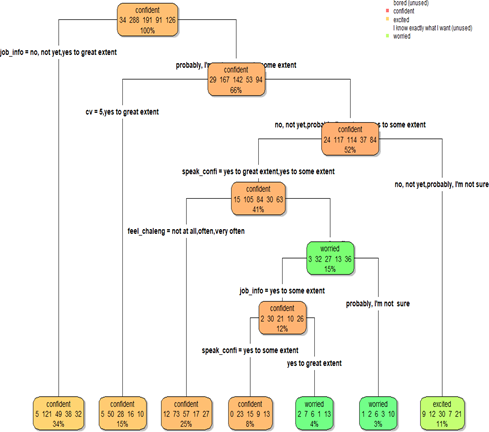
The Decision Tree (DT) analysis was performed to identify and classify factors that affect students’ job readiness, visually represent decision-making processes, and highlight important variables that affect job confidence. Factor analysis reduces the amount of information needed to determine the main skills that contribute to job readiness by examining the correlation between enlisted skills and abilities. All statistical analyses were performed using the R program to make the results repeatable. Additionally, chi-square tests assessed the importance of the relationship between categorical accessories, paying special attention to the associations between work planning and emotional readiness. The combination of these analytical methods provided broad guidance to understand various aspects of graduate job readiness, providing insights to inform educational reforms and improve job outcomes in the evolving Pakistani labor market.
Results
This section presents the outcomes of an extensive analysis based on a survey conducted. The result is organized along several key dimensions: graduates’ readiness for future goals, emotional readiness, skills gap, learning challenges, and practical skills. Each theme is supported by statistical analysis and associated literature to contextualize the findings within existing research.
Graduates' Readiness for Future GoalsMost of the graduates reported having clear career goals, but most lacked direction or started thinking about their careers, as per the survey results. According to Table 2, 35% of the respondents had doubts about their work. This finding is consistent with the work of Reddy et al. (2023), which highlights the importance of job transparency in enhancing employee capacity. One person answered, “I’m not sure how my degree relates to job availability in the market”. This reflects the relationship between educational programs and job outcomes.
Table 2
Graduates’ Career Planning
|
Career Goal |
Frequency |
Percentage |
|---|---|---|
|
No, I don’t know yet |
42 |
5.76 |
|
Not yet, but started to think about career |
175 |
24.01 |
|
Yes, I have strong career goal |
512 |
70.23 |
These findings highlight the need for a robust career mentoring program to ensure that students have a clearer career path and better align with what the labor market demands. Failure to guide graduates could lead to long-term unemployment and underemployment. This has far-reaching economic implications, as research shows that graduate underemployment and skills mismatches contribute significantly to inefficiencies in the labor market (Green & Henseke, 2021).
Graduates Emotional ReadinessAnalysis of correspondence highlighted a statistically significant correlation between emotional readiness and work planning measured by self-confidence and stress levels. Graduates with clear career goals had higher confidence, while graduates with no clear aspirations were reported to have higher levels of anxiety. The chi-square examination confirmed a statistically significant correlation (X² = 40.33, p < 0.001, Cramer’s V = 0.45). A student responded that “not knowing where I will work after my graduation makes me always stressed”. So, career clarity is important for a smooth transition from graduation to employment. The other correspondence analysis results also showed a significant impact.
Figure 1
Graduates' Readiness Correlation
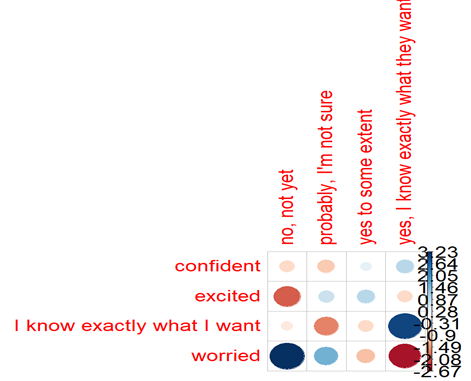
Table 3
Chi-square Test Results
|
Statistic |
value |
p_value |
df |
|---|---|---|---|
|
Pearson’s Chi-squared test |
40.33 |
6.60e-06 |
9 |
The results suggest that emotional preparedness is crucial for a successful changeover to the world of work. This is consistent with the Social Cognitive Career Theory (SCCT), which states that self-efficacy and work planning have a significant impact on job outcomes. Graduates who are confident in their work tend to look for jobs and improve their ability to be employed.
Figure 2Correspondence Analysis Biplot
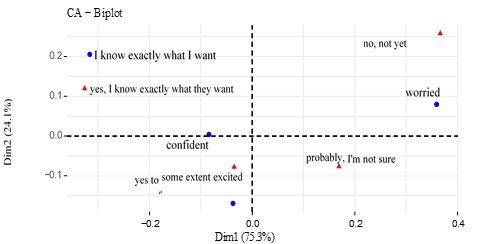
Figure 3
Correspondence Scree Plot
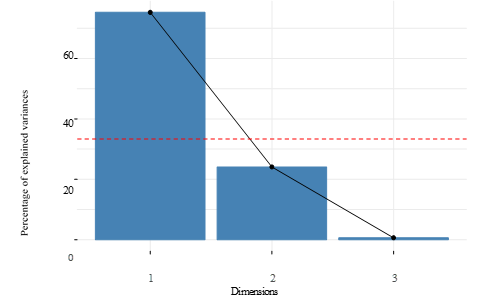
Figure 2 presents the biplot from correspondence analysis, which illustrates a strong association between graduates’ emotional readiness and career goal clarity. Graduates who have well-defined career goals feel confident and excited. The first two dimensions in the biplot explain approximately 95% of the total variance, as also shown in the scree plot (Figure 3), capturing the key emotional and planning-related factors influencing perceived work readiness.
Challenges Faced by Graduates
The main result in reaching the second goal of the study is a wide gap in the understanding of digital illiteracy and AI. Approximately 44% of those polled admitted that they have limited knowledge of AI, and 28% lack understanding of automated technologies. This shortcoming is even more pronounced among non-technical graduates. These responses reflect the fact that educational institutions lack the competence to integrate digital competency into the education system in order to meet the needs of an industry that is evolving.
Table 4
Discipline-wise AI Awareness among Graduates
|
|
Humanities |
Management Sci |
Natural Sci |
Social Sci |
Total |
|---|---|---|---|---|---|
|
ai_awr |
|
|
|
|
|
|
no, I have no idea |
0 (0%) |
6 (0.9%) |
27 (4.2%) |
34 (5.2%) |
67 (10%) |
|
to some extent |
6 (0.9%) |
32 (4.9%) |
116 (18%) |
132 (20%) |
286 (44%) |
|
very little |
5 (0.8%) |
30 (4.6%) |
63 (9.7%) |
81 (12%) |
179 (28%) |
|
very much |
1 (0.2%) |
16 (2.5%) |
40 (6.2%) |
61 (9.4%) |
118 (18%) |
|
Total |
12 (1.8%) |
84 (13%) |
246 (38%) |
308 (47%) |
650 (100%) |
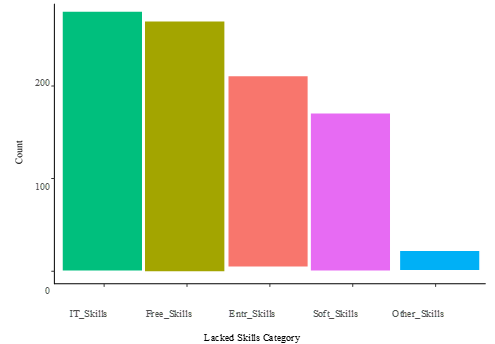
In addition to the shortcomings in AI comprehension, significant gaps appear in other basic technological skills, as shown in the bar graph in Figure 4, specifically in IT, freelancing, and entrepreneurial skills. These competencies are increasingly important in the gig economy. A flexible, high-paying opportunity can be accessed primarily for people with strong technological and business acumen. Evidence suggests that graduates without these skills take advantage of these opportunities to limit their work activities and economic potential. These barriers reflect deficiencies in Pakistan’s education system, where highly sought-after skills are not adequately taught. This contributes to the graduates’ lack of confidence in their jobs.
Figure 4
Ranking of Lacked Skill Categories among Graduates
The findings regarding digital illiteracy among graduates cite an accessible digital illiteracy model that may address the gap between higher education and workplace requirements, according to a study by Reddy et al. (2023). Similarly, Khan et al. (2022) highlighted the importance of adapting digital literacy to the needs of workers to be employed in the 21st-century economic environment. Organizations should prioritize independence skills, organizational training, and non-technical skills, such as interaction with others and solution-oriented thinking, into their curriculum. Without this change, most of the graduated workers could be confined to low-skilled, low-paying jobs, thus making it impossible to find rapidly evolving opportunities in the global labor market.
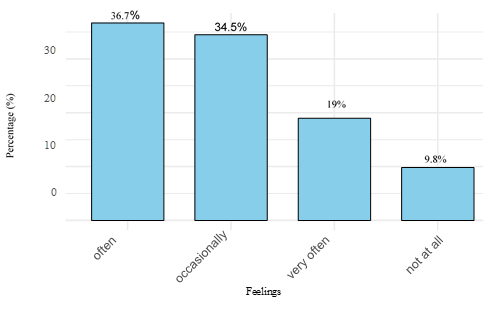
Challenges in LearningThe response to challenges in education shows that there are serious flaws in the education system. It suggests that educational and teaching methods that allow for effective careers may not be the best outcome when most students find it difficult to learn regularly. In Figure 5, 36.7% of students reported that they often find it difficult to learn new concepts, citing reasons such as old teaching methods and insufficient academic capacity. One participant said, “Most of our lessons are theoretical, and there is no opportunity to apply what we learn to real-world situations”. These barriers hinder the stages of learning a skill and contribute to an inconsistent value in the labor market.
Figure 5Graduates' Feelings in Learning Challenges
The findings are consistent with the job of Autor et al. (2003), with the claim that impracticality in education may lead to a skills gap that affects employment. Through the evolution of the education system, it should include hands-on learning opportunities that prepare students for the realities of the labor market.
Importance of Practical SkillsThe DT analysis demonstrates that practical skills, such as CV preparation and job search strategies, significantly enhance career readiness. Preparatory graduates were 3.5 times more likely to express confidence in job insurance (Odds Ratio = 3.5, 95% CI: 2.8–4.3) who can create an effective CV and have job market knowledge. For instance, one respondent noted, “Learning how to write an effective CV during a workshop helped me secure multiple job interviews within a month”. These findings reinforce the importance of integrating practical job search training into educational programs.
Figure 6Decision Tree (DT) for Readiness
Core Dimensions of Career Readiness
Factor analysis identified three key dimensions: technical skills, job market information, and speaking confidence as the most critical factors of career readiness. Low uniqueness values emphasize their strong importance in CV preparation (0.005) and technical skills (0.15). It is these bandwidths that make up about 80% of group-level data diversity, underscoring its importance in shaping employee outcomes.
Table 5
Factor Loadings and Uniqueness
|
Variable |
Factor1 |
Factor2 |
Factor3 |
Uniqueness |
|---|---|---|---|---|
|
Career_feeling |
-0.0080273 |
-0.0425329 |
-0.1289779 |
0.981 |
|
cv |
0.9812142 |
0.1147540 |
0.1380224 |
0.005 |
|
Job_info |
0.0106742 |
0.2485565 |
0.2899901 |
0.854 |
|
Speak _confidently |
0.1183891 |
0.1416387 |
0.4065461 |
0.801 |
|
ai_awr |
-0.0211771 |
0.1913751 |
0.0743937 |
0.957 |
|
Effect_skill |
0.0748137 |
0.1118890 |
0.1976107 |
0.943 |
|
Feel_challenge |
-0.0633727 |
0.1061730 |
0.2397586 |
0.927 |
|
Skill_mismatch |
0.0347494 |
-0.0159028 |
0.2428243 |
0.940 |
|
List_strength |
0.0501035 |
0.3657097 |
0.2462646 |
0.803 |
|
Skill_dd |
0.1839635 |
0.6540002 |
0.0038695 |
0.538 |
Economic Implications
The findings of this study are of economic importance. The skills gap and lack of practical training among graduates affect not only the ability to be employed as individuals but also economic barriers to national productivity and economic growth. As Frey and Osborne (2013) pointed out, a workforce that is not adequately prepared for technological advancement may face structural unemployment, especially in sectors increasingly dependent on automation and AI. Meeting these challenges by prioritizing practical skills, digital literacy, and job guidelines can make graduates more employable, contributing to a stronger economy. By adapting educational outcomes to market demand, Pakistan can better prepare its workforce for the Complications of Industry 4.0 development, which would eventually shake up novelties and economic competition.
Conclusion
The findings highlighted a major skill barrier between the theoretical focus of educational institutions and the practical skills demanded by the modern labor market. This gap is particularly evident in areas such as digital illiteracy, which has become critical across various sectors of the economy. Graduates from non-technical disciplines, such as humanities and social sciences, often report feeling unprepared for work. This emphasizes the need for educational reforms that align more closely with the realities of the contemporary workforce.
Statistical analyses, including chi-squared tests and DT models, indicate that practical skills, such as CV preparation and awareness of labor market demand, significantly enhanced job readiness. Graduates who possess these skills tend to be more confident and more likely to secure stable employment. These findings reinforce the need for educational institutions to integrate practical job search training into their curricula.
Additionally, the study highlighted that many organizations have failed to provide adequate exposure to automation and digitization, particularly in emerging technologies, such as intelligent systems, algorithmic modeling, and other related competencies. A lack of digital literacy continues to widen the skills gap. To address this, educational institutions need to improve their curricula in order to better prepare students to pursue careers in the digital economy.
The results also suggest that Spence’s signaling theory may be misinterpreted by employers, who often equate degrees with preparedness despite lacking evidence of actual skills. Furthermore, the findings are consistent with Tinbergen’s model, which explains how delayed responses from education systems to technological advancements contribute to the growing talent gap.
Future Recommendations
The current study underscored an urgent need for comprehensive educational reforms in Pakistan. These reforms should prioritize practical training, promotion of digital literacy, and alignment of educational outcomes with the evolving demands of the global labor market. By addressing these challenges, educational institutions in Pakistan may better equip graduates for successful careers and help reduce unemployment among educated youth. Furthermore, as Romer’s endogenous growth theory suggests, aligning education with market needs may significantly enhance innovation, productivity, and long-term economic growth.
Conflict of Interest
The authors of the manuscript have no financial or non-financial conflict of interest in the subject matter or materials discussed in this manuscript.
Data Availability Statement
Data supporting the findings of this study will be made available by the corresponding author upon request.
Funding Details
No funding has been received for this research.
REFERENCES
Ansarey, D. (2017). Skill gap analysis for new job market entrants: A study on selected university graduates. ASA University Review, 11(2), 85–102.
Autor, D. H., Levy, F., & Murnane, R. J. (2003). The skill content of recent technological change: An empirical exploration. Quarterly Journal of Economics, 118(4), 1279–1333. https://doi.org/10.1162/003355303322552801
Béduwé, C., & Giret, J. F. (2011). Mismatch of vocational graduates: What penalty on the French labour market? Journal of Vocational Behavior, 78(1), 68–79. https://doi.org/10.1016/j.jvb.2010.09.003
Bessen, J. E. (2015). Learning by doing: The real connection between innovation, wages, and wealth. Yale University Press.
Bhatti, M. A., Mat Saat, S. A., Aleidan, M. M., Al Mutairi, G. H. M., Alyahya, M., & Juhari, A. S. (2022). Exploring business graduates' employability skills and teaching/learning techniques. Innovations in Education and Teaching International, 60(2), 207–217. https://doi.org/10.1080/14703297.2022.2049851
Brown, P., Lauder, H., & Ashton, D. (2011). The global auction: The broken promises of education, jobs, and incomes. Oxford University Press.
Cai, Y. (2013). Graduate employability: A conceptual framework for understanding employers' perceptions. Higher Education, 65(4), 457–469. https://doi.org/10.1007/s10734-012-9556-x
Cao, Y., Guo, Z., & Han, Y. (2021, October 22–24). Research on promoting the employment level of university students under the background of COVID-19 [Paper presentation]. Proceedings of the 2021 3rd International Conference on Economic Management and Cultural Industry, Guangzhou, China.
Cappelli, P. (2012). Why good people can't get jobs: The skills gap and what companies can do about it. Wharton Digital Press.
Frey, C. B., & Osborne, M. A. (2013). The future of employment: How susceptible are jobs to computerization? Technological Forecasting and Social Change, 114, 254–280.
Green, F., & Henseke, G. (2021). Europe's evolving graduate labour markets: Supply, demand, underemployment and pay. Journal for Labour Market Research, 55(2), 1–19. https://doi.org/10.1186/s12651-021-00288-y
Jackson, D. (2013). Business graduate employability – Where are we going wrong? Higher Education Research & Development, 32(5), 737–750. https://doi.org/10.1080/07294360.2013.832154
Khan, N., Sarwar, A., Chen, T. B., & Khan, S. (2022). Connecting digital literacy in higher education to the 21st-century workforce. Knowledge Management & E-Learning, 14(4), 89–105. https://doi.org/10.34105/j.kmel.2022.14.005
Malau-Aduli, B. S., Jones, K., Smith, A. M., Sen Gupta, T., & Hays, R. B. (2022). Understanding medical students' transformative experiences of early preclinical international rural placement over a 20-year period. BMC Medical Education, 22, Article e89. https://doi.org/10.1186/s12909-022-03120-4
Reddy, P., Chaudhary, K., & Hussein, S. (2023). A digital literacy model to narrow the digital literacy skills gap. Heliyon, 9(2), Article e145678. https://doi.org/10.1016/j.heliyon.2023.45678
Rosfiyanti, M., Hidayatullah, A., & Prasetyo, A. (2024). Bridging the digital divide: Enhancing digital literacy for workforce competitiveness in Southeast Asia. Journal of Educational Technology and Innovation, 12(1), 45–62.